
We are going to be looking at:
we use the type() methd to see what type something is.
Here we can see the type of “11.5” is a float.
type(11.5)

Implicit: Automatically handled by Python (no manual conversion needed)
Explicit: Manually converting one data type to another
Example 1 - Addition
					num_int = 123  # integer
num_float = 1.23  # float
Here, the result would be a float.
When you add an int and a float, Python automatically converts the int to a float.(implicit type conversion).
Python does this to avoid losing decimal precision.
result = num_int + num_float # result will be float
print("Result:", result)

Example 2 - Division
					num1 = 7
num2 = 11
Here also the result would be a float.
result_division = num1/num2 # result will be float
print("Result:", result_division)

Lets look at the Explicit.
Example 3 - Converting string to integer
num_str = "123"
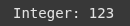
Here we convert the num_str from a string to an interger using the int() method
num_int = int(num_str)
print("Integer:", num_int)
Example 4 String to Float
Here we are converting a string “num_str” to a float using the float() methond
					# Converting string to float
num_str = "123.45"
num_float = float(num_str)
print("Float:", num_float)

Example 5 Int to String
Here we convert interger “num_int” to string using the str() method
					# Converting integer to string
num_int = 123
num_str = str(num_int)
print("String:", num_str)

Example 6 - hexadecimal, octal , Complex
Here we convert an int “num_int” to hex() which is a hexadecimal (base-16),
we also convert the int “num_int” to oct() which is an octal(base-8) and complex() which is a complex number
					num_int = 123
hexadecimal = hex(num_int)
octal = oct(num_int)
complex = complex(num_int)
Example 7 List to Tuple
my_list = [1, 2, 3, 4, 5]
Here we convert a list “my_list” to a tuple.
my_tuple = tuple(my_list)
Example 8 List to set
my_set = set(my_list)
Example 9 List to Dictionary
my_list_pairs = [(1, 'a'), (2, 'b'), (3, 'c')]
Here we convert a list of key-value pairs(tuples) into a dictionary, where each first element becomes a key and the second element becomes it’s corresponding value.
my_dict = dict(my_list_pairs)
Example 10 Converting Tuple to List
my_tuple = (1, 2, 3, 4, 5)
Here we convert a tuple to a list.
using the list() method.
my_list = list(my_tuple)
Example 11 Converting Tuple to Set
We use the set() method to convert a tuple “my_tuple” to a set.
my_set = set(my_tuple)
Example 12 Converting Tuple to Dictionary
my_tuple_pairs = ((1, 'a'), (2, 'b'), (3, 'c'))
Here we cinvert tuple “my_tuple_pairs” to a dictionary using the dict(0 method.
my_dict = dict(my_tuple_pairs)
Example 13 Converting Set to List
my_set = {1, 2, 3, 4, 5}
We convert a set “my_set” to a list using the list() method
my_list = list(my_set)
Example 14 Converting Set to Tuple
We convert a set “my_set” to a tuple using the tuple() method.
my_tuple = tuple(my_set)
Example 15 Converting Set to Dictionary
my_set_pairs = {(1, 'a'), (2, 'b'), (3, 'c')}
Here we convert a set “my_set_pairs” to a dictionary using the dict() method.
my_dict = dict(my_set_pairs)
Example 16 Converting Dictionary to List
my_dict = {1: 'a', 2: 'b', 3: 'c'}
Here we convert a dictionary “my_dict” to a list using the list() method. we use the .items() to grab the items in the dict
my_list = list(my_dict.items())
Example 17 Converting Dictionary to Tuple
Here we convert the dictionary to a tuple using the tuple() method.
my_tuple = tuple(my_dict.items())
Example 18 Converting Dictionary to Set
my_set = set(my_dict.items())
Example 19 string to list
team = 'Rays'
Here we convert a string “team” to a list using the list() method.
list(team)

Example 20 string to set
Here we convert the string “team” to a set using the set() method.
set(team)

Example 21 string to tuple
Here we convert the string “team” to a tuple using the tuple() method
team_tuple = tuple(team)
team_tuple

